

BLOG
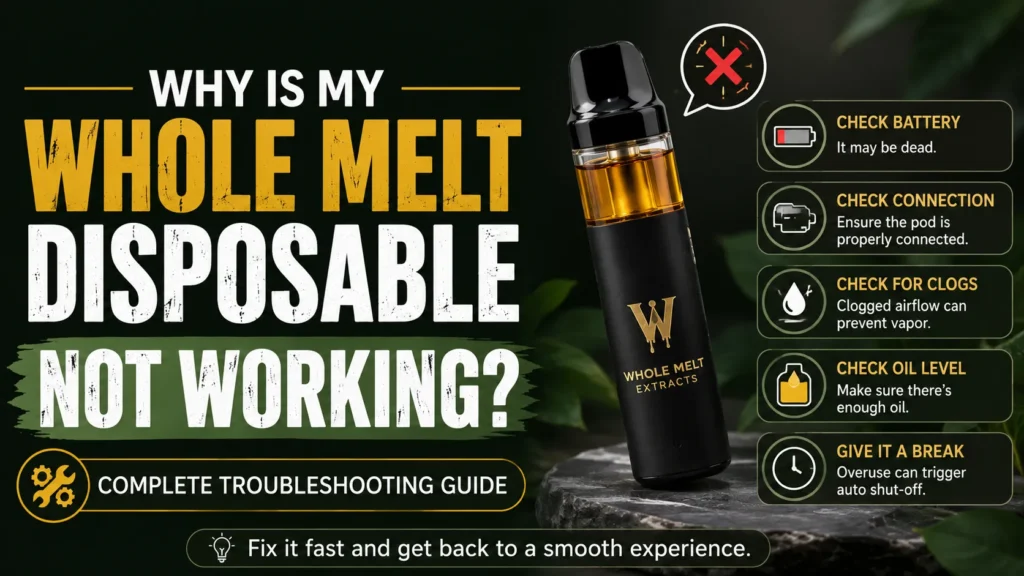
A disposable vape like a Whole Melt device is designed to be simple, smooth, and ready to use right out of the box. So when it suddenly stops hitting, it feels frustrating and confusing. You might wonder if it’s broken, empty, or just not activating properly. The truth is, most issues are not permanent failures but common problems that happen with disposables due to airflow, battery limits, or internal clogging. Understanding these issues helps you quickly figure out what’s wrong instead of guessing or throwing the device away too early.
A Whole Melt disposable vape is a pre-filled, single-use vaping device designed for convenience. It comes ready with battery power and oil inside, meaning there is no need for charging, refilling, or maintenance. Once the battery or oil runs out, the device is meant to be discarded. These devices are popular because they are compact, easy to use, and don’t require technical knowledge.
Unlike refillable vape systems, disposables rely on factory-sealed components. This makes them easy for beginners but also means that once something inside fails, it is usually not repairable. That’s why troubleshooting is important before assuming the device is completely dead.
A properly working Whole Melt disposable activates when you inhale through the mouthpiece. The airflow sensor detects suction, which triggers the battery to heat the coil. The coil then vaporizes the oil inside, producing smooth vapor. There are no buttons or settings involved.
When everything works correctly, the experience should feel instant and consistent. If you are not getting vapor, it usually means one of these three systems is failing: airflow, battery, or oil flow.
One of the most common reasons a disposable stops working is a drained battery. Even if there is oil left inside, the device cannot function without power. Sometimes, the battery may also be weak from manufacturing defects or storage conditions. If the device gives no light or response at all, the battery is usually the main suspect.
Cold temperatures can also affect battery performance. A weak battery may struggle to heat the coil properly, making it seem like the vape is broken when it is actually just underpowered.
Airflow is essential for activating the device. If the airway is blocked, the sensor won’t detect your inhale. This is a very common issue with disposable vapes, especially if they are carried in pockets or exposed to dust.
Blockages can happen due to condensation buildup or thick oil settling inside the airway. When airflow is restricted, you might feel like you are pulling but getting no vapor at all.
Another major issue is clogging inside the cartridge. Whole Melt disposables contain concentrated oils that can become thick, especially in cold environments. When the oil doesn’t flow properly to the coil, the device may stop producing vapor or deliver weak hits.
This problem is more common when the device has not been used for a while or has been stored in a cold place. The oil becomes too dense to vaporize efficiently.
Sometimes the issue is not user-related at all. A small percentage of disposables come with manufacturing defects. This could include faulty wiring, weak batteries, or improper sealing. In these cases, the device may never work properly from the beginning.
Before assuming your device is dead, try a few basic checks:
These simple actions often fix minor issues without any tools or repairs.
If airflow is the issue, you can try gently clearing the mouthpiece. Sometimes lightly blowing into the opposite end can help dislodge trapped oil or condensation. However, this should be done carefully to avoid damaging internal components.
Another trick is to rotate the device and try inhaling from different angles. This can help shift any internal blockage.
If the oil is too thick, warming the device slightly can help. Hold it in your hand for a few minutes or keep it in a warm pocket. The goal is to gently loosen the oil so it flows more easily to the coil.
Avoid using direct heat like fire or hot water, as this can permanently damage the device or create safety risks.
If there is no vapor at all, check whether the device lights up when you inhale. If there is no light, the battery is likely dead. Unfortunately, disposable vape batteries cannot be recharged or replaced, so this usually means the device has reached the end of its life.
When you inhale and there is no LED response, no vibration, and no vapor, it usually indicates a dead battery or complete internal failure. This is the clearest sign that the device cannot be revived.
If the device produces a burnt taste or extremely weak vapor, it may mean the oil is finished or the coil is damaged. In this case, continuing to use it can worsen the experience and is not recommended.
Storing your disposable correctly can extend its lifespan. Keep it in a cool, dry place away from direct sunlight. Avoid leaving it in hot cars or freezing environments, as both extremes affect oil and battery performance.
Taking long, continuous puffs can overheat the coil and reduce its efficiency. Short, controlled puffs help maintain consistent performance. Overuse in a short time can also drain the battery faster than expected.
If you have tried basic troubleshooting and still get no vapor, it’s likely time to replace the device. Disposables are not designed for repair, so once the battery fails or internal components stop working, replacement is the only practical solution.
A good rule is: if there is no light, no airflow response, and no vapor after warming and checking blockage, the device is done.
Whole Melt disposables are designed for convenience, not long-term durability. Most problems come from airflow blockage, oil thickening, or battery limits rather than serious damage. Understanding how the device works makes it easier to quickly identify what’s wrong without frustration.
Instead of assuming it’s broken immediately, a few simple checks can often bring it back to life, or confirm that it has simply reached the end of its lifespan.
It is usually a battery or airflow issue, not oil level. The device may not be activating properly.
No, most disposables are not designed to be recharged safely.
A blinking light usually indicates a low battery or a connection issue inside the device.
Try warming it slightly and gently clearing the mouthpiece to improve airflow.
It depends on usage, but typically until the battery or oil runs out, whichever comes first.
A link to set a new password will be sent to your email address.
Your personal data will be used to support your experience throughout this website, to manage access to your account, and for other purposes described in our privacy policy.